The Land We're On
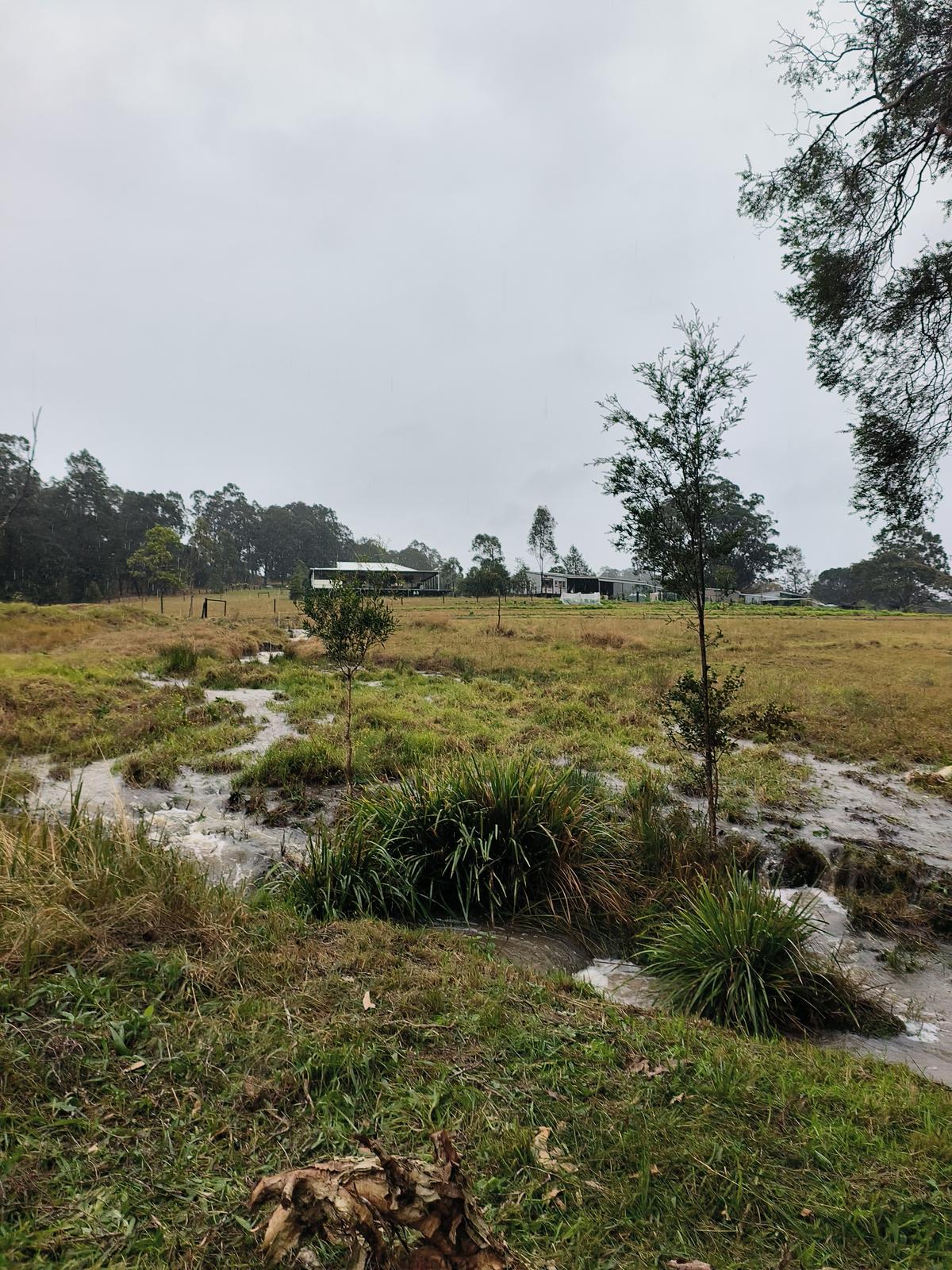
The mid-north coast of New South Wales is historically dairy country. That industry petered out by the 1970s — for many reasons, but a fundamental one is that this area, like much of coastal Australia, has poor quality soil. The topsoil is thin. The bedrock and clay beneath it are devoid of the minerals life needs. And as a result, there are very few microbes in the soil.
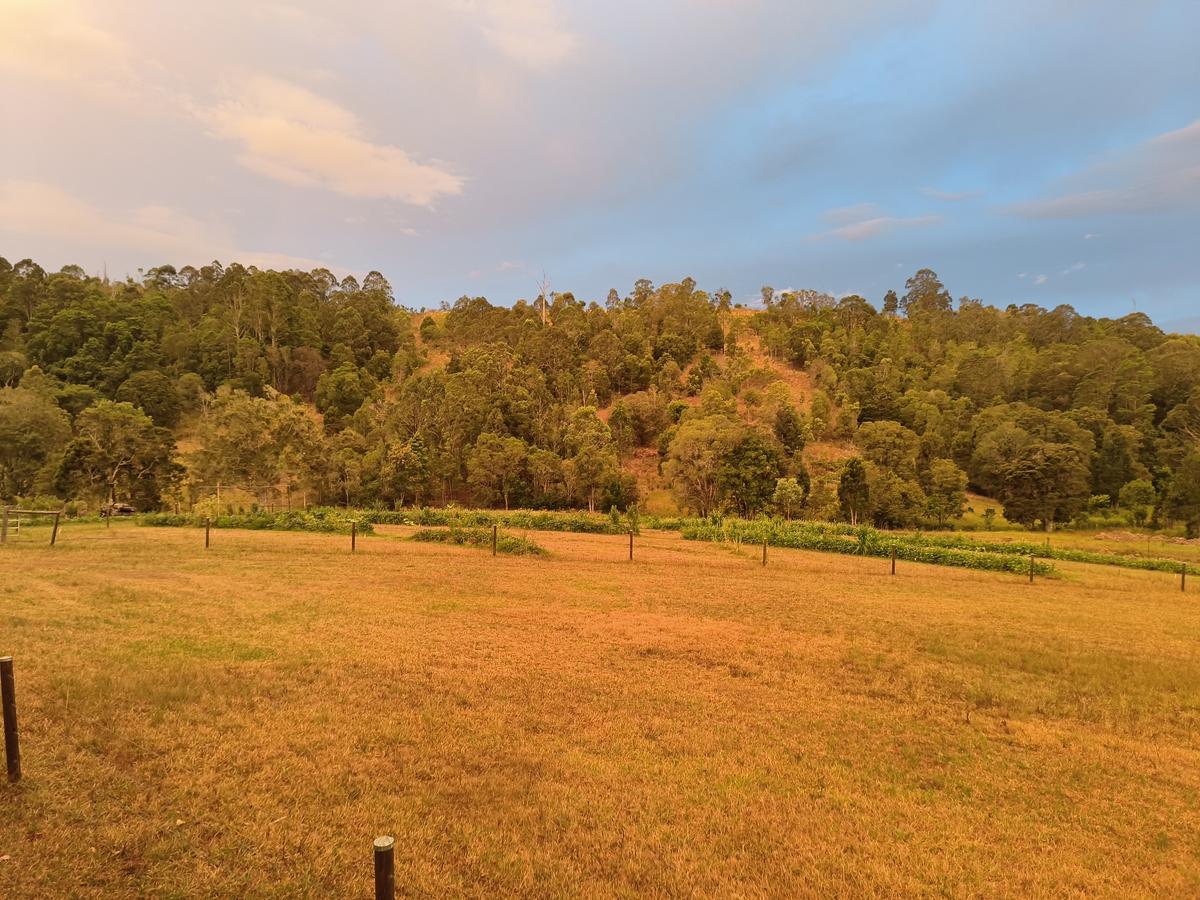
Microbes are the engine of soil fertility. Without them, plants struggle regardless of rainfall or sunlight. Everything we do at Firefly Corner is ultimately aimed at rebuilding the microbial life in this ground.
We're a Permaculture Farm
Firefly Corner is a permaculture farm. The principles most important to us: use what's around you — be self-sufficient, limit what you need from outside. Start small, start learning — all conditions are specific to their location, so learn what works here. And do more of what works — concentrate your effort there so the return grows over time.
The particular kind of permaculture we practise here is syntropic agriculture — developed in Brazil as a method to repair deforested, depleted land.
Plants Are Solar Panels
From a dispassionate scientific standpoint — plants are nature's solar panels. Everything green contains chloroplasts, which perform photosynthesis: taking carbon from the atmosphere and transforming it into sugar. That sugar travels down through the plant into its roots and into the soil.
"A plant is there to feed the life that is underground in the soil. That is its biological purpose."
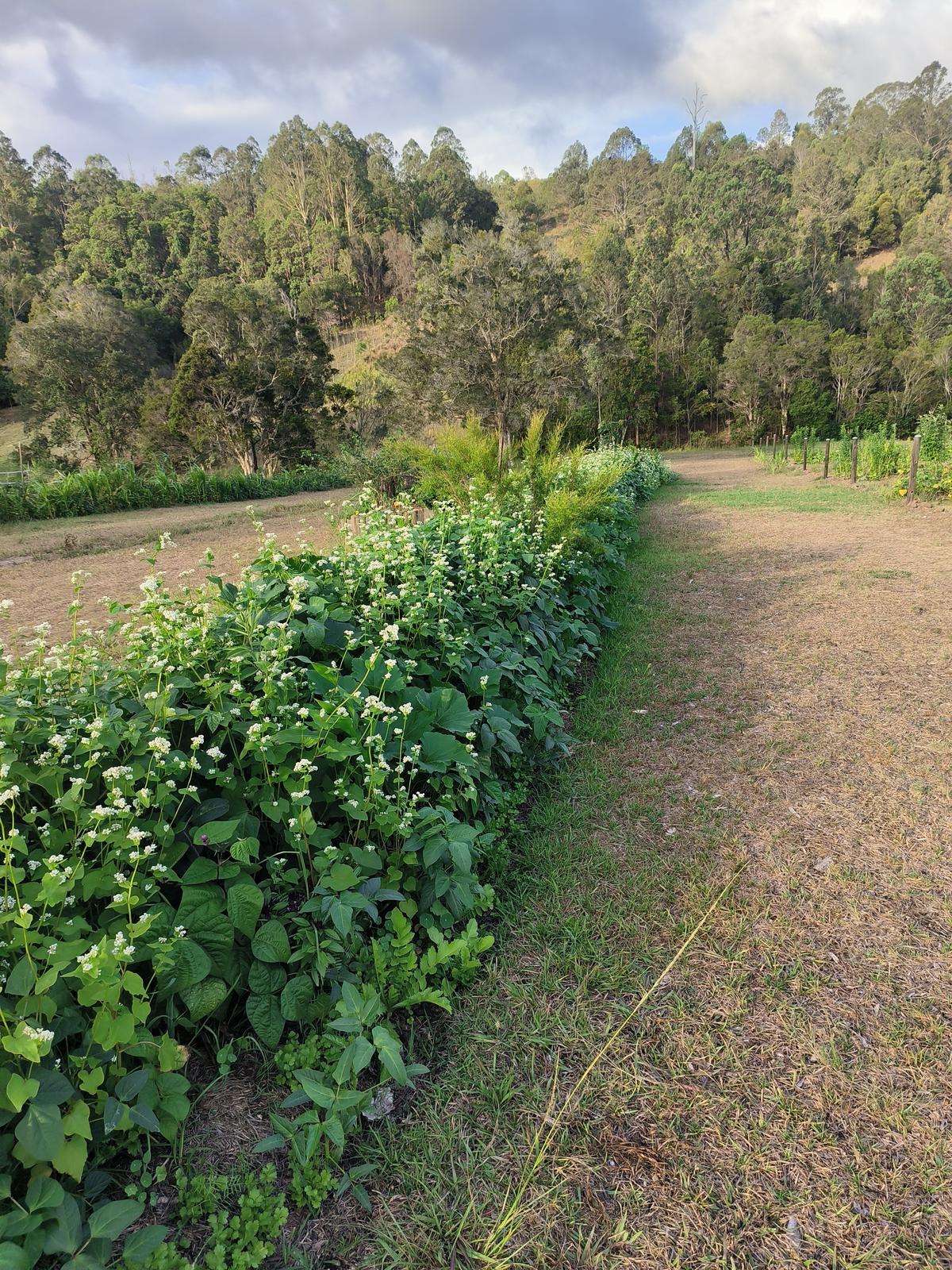
Syntropic agriculture combines plants of many different heights together — stratification — so every level of the air is working.
When you combine all these strata together, you create a mechanism that absolutely maximises photosynthesis. A grass paddock is a very poor photosynthesiser — one layer of leaves at your feet. A forest is perhaps 3× better. Syntropic agriculture, done well, achieves 5 to 7 times the photosynthetic output of a paddock.
The second method is keeping plants young. Young plants photosynthesise at their peak. Through regular pruning and succession planting, we keep as many plants as possible in their "teenage years" — constantly pumping energy back into the ground.
How We Apply This at FFC
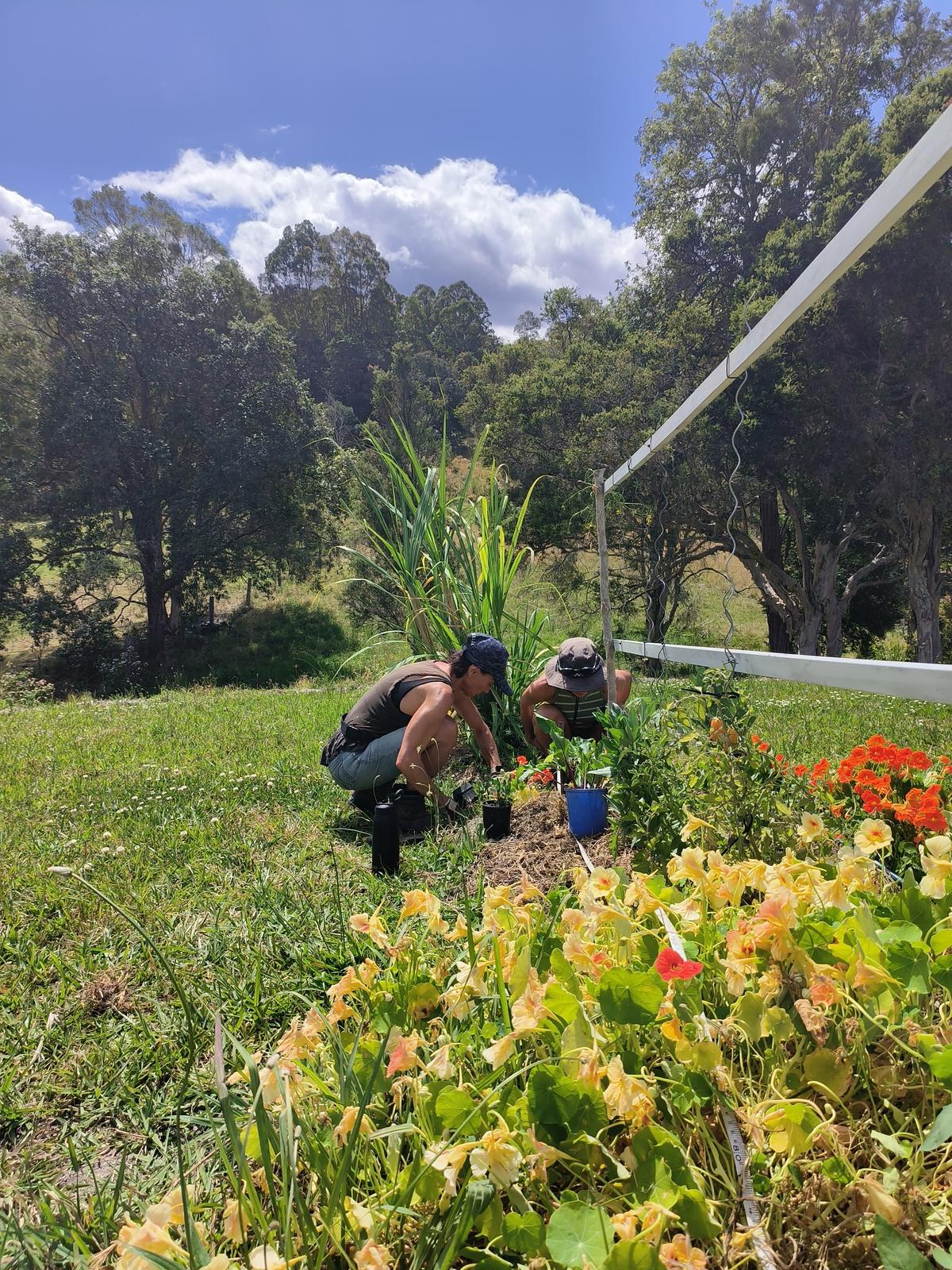
Firefly Corner is 65 acres — but we're working about 5 of them. We're concentrating the resources of a 65-acre farm into 5 acres of paddock, and within those paddocks, into one-metre-wide syntropic rows. Every drop of water, every seedling, every hour of care is aimed at those rows — building soil that becomes more fertile year on year.
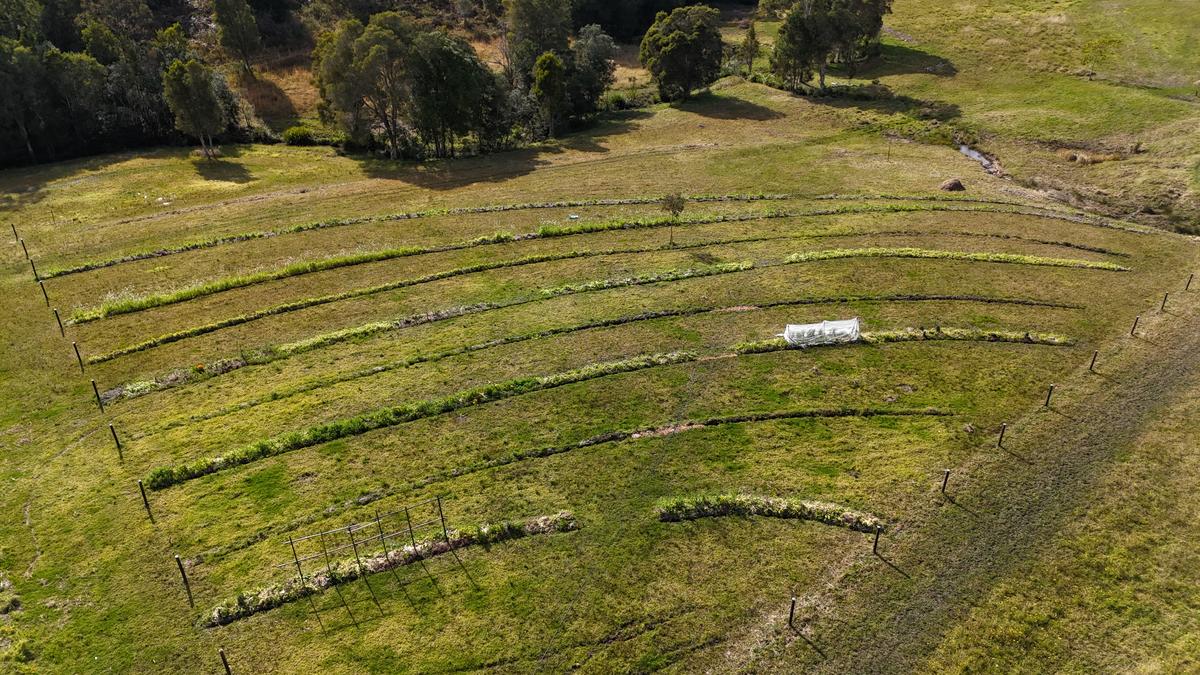
65 acres of land → 5 acres of cultivated paddock → concentrated into 1-metre syntropic rows. Every resource we have is aimed at those rows.
What We're Up Against
-
Extreme weather Like much of Australia, we face increasingly unpredictable extremes — intense rain events followed by harsh dry heat. This is only going to get more pronounced.
-
Magnesium-tight soil About 10cm of topsoil, then thick clay underneath. When wet, this clay expands like a puffer fish — becoming so tight that water can't infiltrate. Rain runs off rather than soaking in. If you're here during a wet period, your boots will tell you everything you need to know.
-
Depleted microbial life Decades of dairy farming and the underlying geology have left the soil with very little microbial diversity. Rebuilding this takes time and the right conditions.
-
Protecting young plants As we grow our diversity of plants from seedlings and adolescent plants, they need protection from extremes — flood, heat, wind. Using other plants to shelter them is one of our primary tools.