
SPRING HAS SPRUNG
AN EARLY NOVEMBER STROLL TO CHECK OUR STRATA OF PLANTS
This week I want to share some hands-on insights from Row 1, Paddock 2, here at Firefly Corner as we move into the thick of spring. I recently spent some time walking this row, talking aloud to document the patterns I see and the lessons they offer for anyone interested in the syntropic approach.
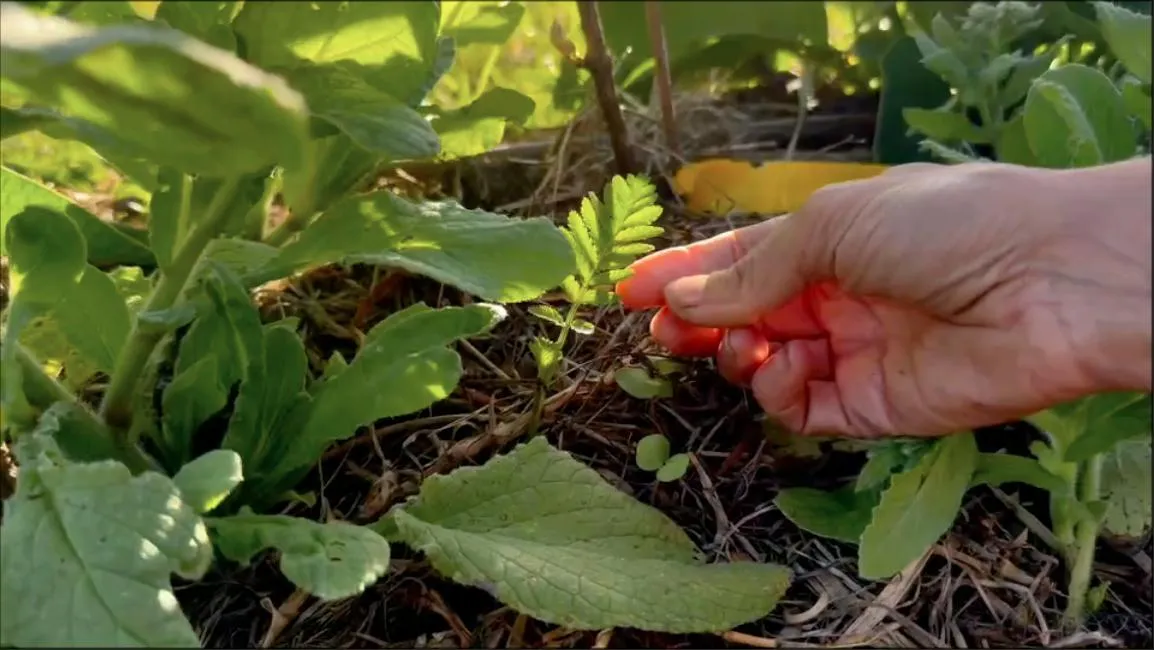
For those less familiar, syntropic agroforestry means growing plants—as many different types and life cycles as you can—together in layers or “strata”, just like a natural forest. On this row, I have a guava as an emergent tree, which should form a protective canopy for a good decade or more, alongside grapevine and pigeon pea for that upper and mid-storey. Lower down, we’ve planted herbs and covers: comfrey, borage, lemon balm, marjoram, oregano and cowpea all play their part forming a protective green carpet. Each of these species grows and interacts uniquely—some shoot up fast, others hug the ground, and some live just a season, while a few will be with us for decades.
One thing that always strikes me is how obvious it becomes, even after a single season, when there’s a missing piece in the puzzle. Where all the layers are well-represented, health abounds—the plants seem more vibrant, pests are fewer, and the soil stays moist and alive. Where a stratum is missing, or coverage is poor, problems crop up: weeds rush in, leaves yellow, or pests multiply. It’s a vivid lesson that good health really is “contagious”—and unfortunately, so is poor health! A patch without enough ground cover, for instance, quickly slips back, so I’m always on the lookout for those gaps.
Now, with the soil warming and the days stretching out, spring is a critical time for making adjustments. During my walk I noticed several spots where there wasn’t enough medium or low stratum—places where a citrus or two could slot in, or perhaps a new cover crop like buckwheat or cowpea would help. I also saw areas where the comfrey or geranium needed a good prune to allow neighbours a chance to breathe. That’s one of the joys of this method: it’s never static. You’re always tweaking, seeding, transplanting, or giving vigorous growers a haircut.
I did find one spot where, in hindsight, I should have planted a long-lived emergent—maybe a fast-growing eucalyptus to join the guava—when I first put in the grapevine. Syntropy is all about succession; the early quick crops help shield and feed the slower, persistent ones. If you don’t set the system up to move forward, you always end up playing catch up.
So right now, my main tasks are to keep an eye on cover, get any gaps filled as quickly as possible, and make sure every row has enough diversity at every layer. Spring’s a time of fast growth—it’s exciting, but it can be chaotic if you aren’t a few steps ahead.
Walking the rows and really seeing the detail makes all the difference. For me, this is the magic of syntropic farming—not just copying nature, but learning from her on the ground, every day, season by season.