
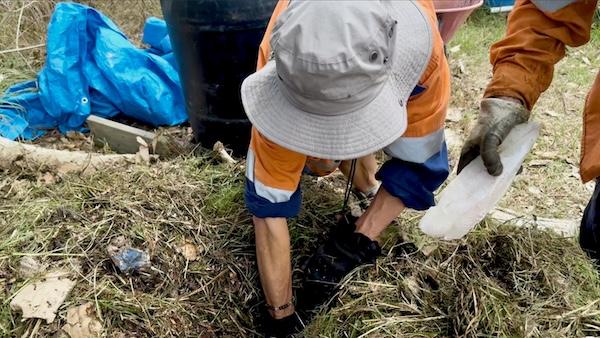
Why we bury fish at Firefly Corner
(And Other Advanced Composting Practices)
On the spectrum of rural wisdom, few pieces of advice are as curiously enduring as “bury a fish for every tomato.” Everyone has heard the legend, usually from an elderly neighbour in a battered hat, who swears that generations before him swore by digging sardines into their garden rows. At Firefly Corner, we must admit—we’ve never actually entombed any unfortunate sea bass beneath the courgettes. But the logic is sound, and with the right approach, you can skip the fish entirely and achieve something even better: a thriving, microbially-rich heap of hot Berkeley compost.
Let us explain (with apologies to disinterred anchovies everywhere).
### The Ancient Art of Burying Fish: A Gateway to Soil Alchemy
Why did the old-timers bury fish? Put simply: nutrients. When you add a fish to your veggie patch, you are providing a rich, if fragrant, blend of slow-release nitrogen, phosphorus, and calcium. The result—a glorious, if slightly odorous, boost for growth.
But for those of us without a reliable fishmonger, there’s a slicker way to conjure that same soil alchemy across the whole farm: the Berkeley Method of composting. It’s neater, less controversial with visiting vegan friends, and you’re much less likely to attract local wildlife with a taste for seafood.
Step 1: Gather Your “Catch”—Berkeley Ingredients
The secret to a truly powerful compost is, as in all good things, balance. The Berkeley Method requires a perfect storm of “browns” (carbon-rich stuff: shredded cardboard, old paper, woodchips, straw) and “greens” (nitrogen-rich: grass clippings, kitchen waste, manure, comfrey, the regrettably forgotten sandwich at the back of the fridge).
Firefly’s Tried-and-True Recipe (by wheelbarrow load):
- 6 loads wood chips
- 5 shredded cardboard
- 3 hay (or straw if you’ve any left from the great scarecrow debacle of 2024)
- 3 dry cow manure
- 3 wet cow manure
- 4 grass clippings
- A handful of comfrey (or whatever vigorous weed is making a nuisance of itself)
The aim? A C/N ratio of about 25–30:1

Step 2: Chop, Shred, Pulverise…and Possibly Apologise
The lesson we’ve learnt is that the smaller the pieces, the faster they’ll break down. Vent your frustration on that pile of cardboard, attack woody stems with secateurs, and break up manure like a chef prepping world-class gnocchi.
Step 3: Build Your Heap Like a Viking Burial Ship
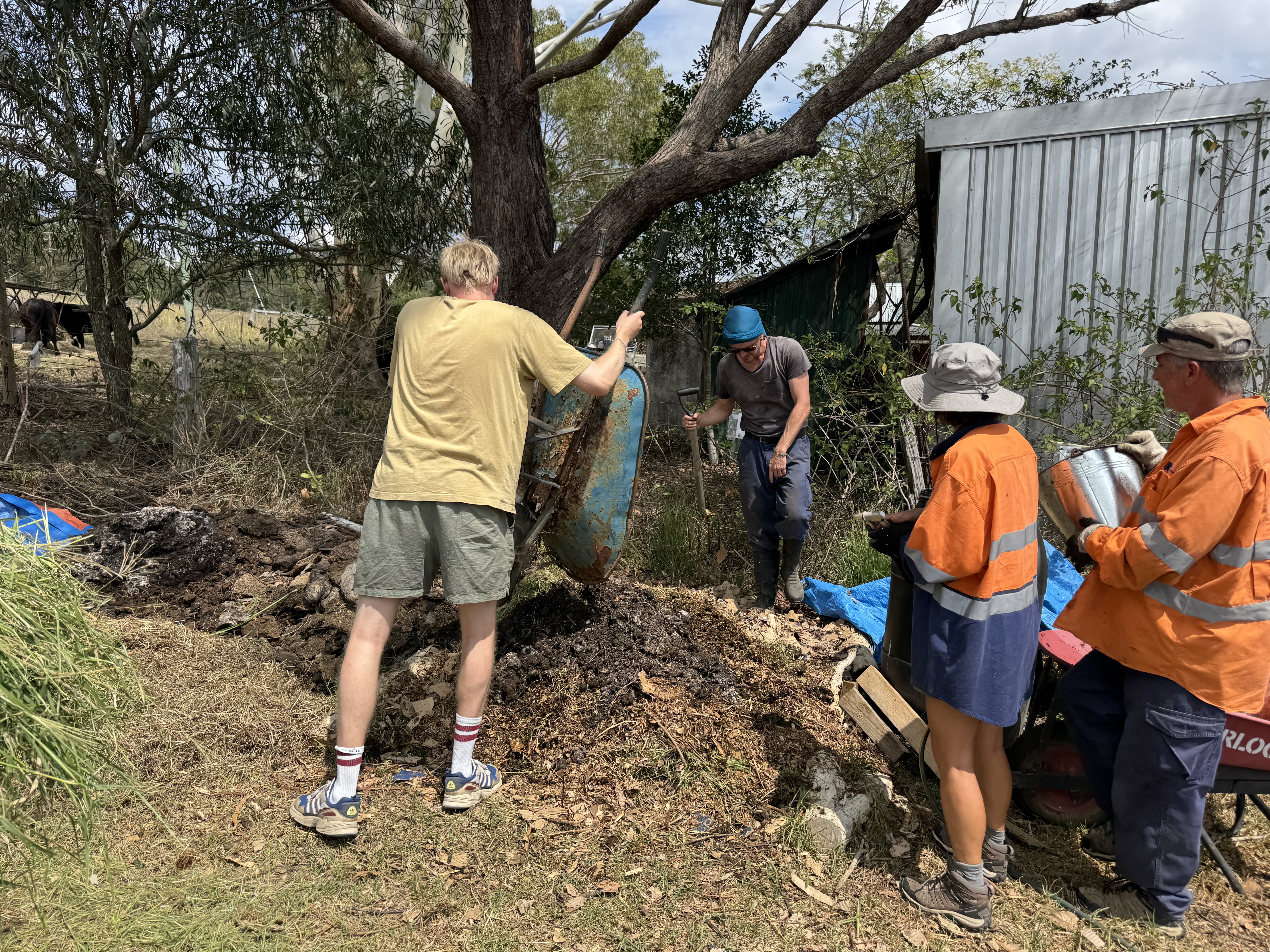
Find a patch of ground unlikely to be needed for croquet this spring. Lay chunky sticks or coarse woody stuff at the bottom (“raft for the microbe gods”), then alternate thick layers of brown and green. Douse liberally with water as you go—aim for “wrung-out sponge,” not “bog of eternal stench.”
Do not, under any circumstances, compact the pile; you want air in there, not a geological core sample.
Step 4: The Big Mix-Up (and Why Burying Fish Actually Works)
Like any good fish stew, the flavours only come together with a proper stir. Once all your treasures are layered, turn the pile thoroughly. At Firefly, we recommend two turns for the cautious, and a third if anyone’s watching, just to look industrious.
Now, a brief aside about our slippery friends:
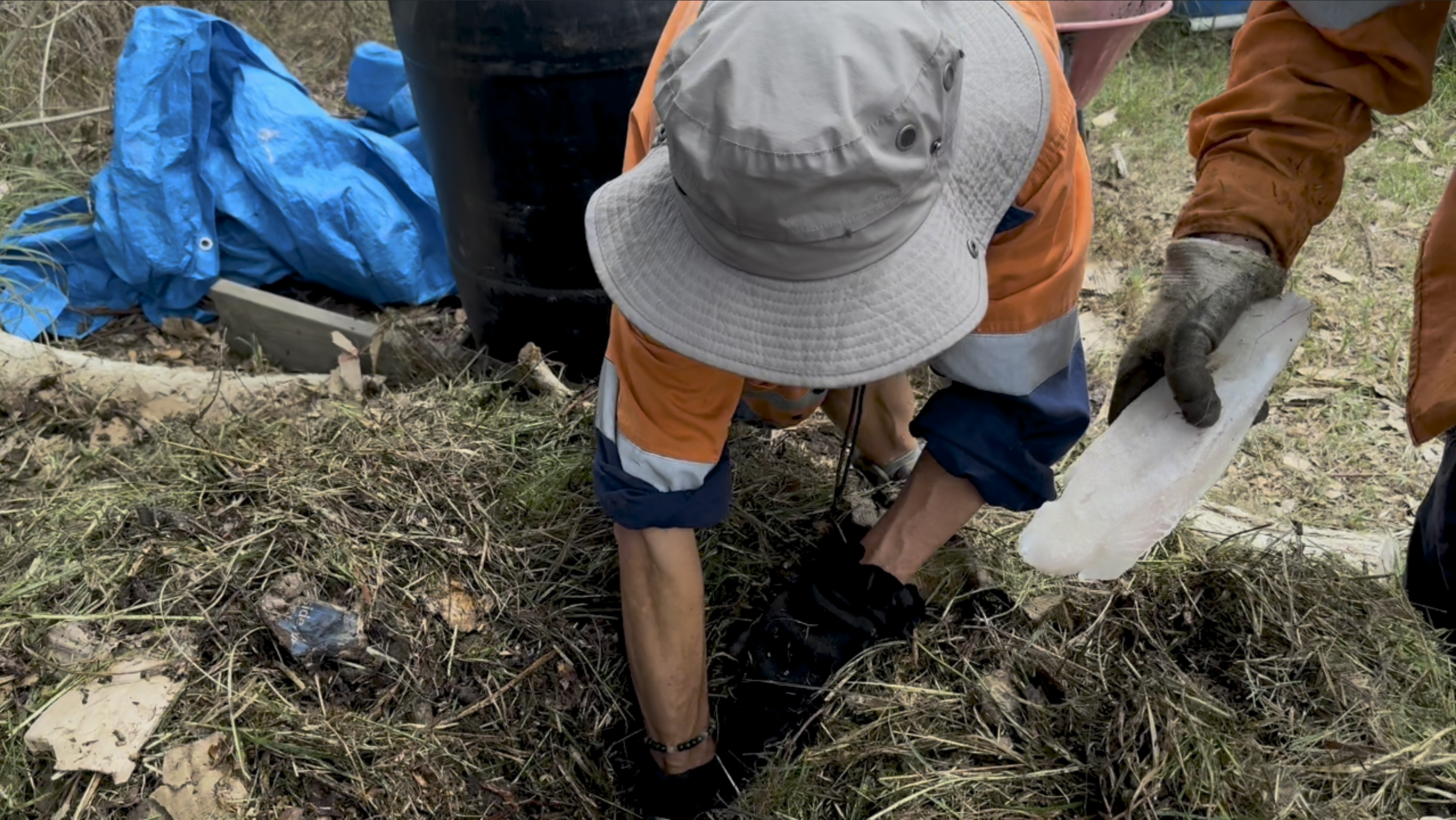
If you were inclined to slip a few raw fish carcases into your compost—not unlike those legendary tomato-burying ancestors—you are, in fact, applying sound science. Raw fish is a compost turbocharger. Here is why:
Scientific Reason:
Raw fish is extraordinarily rich in highly bioavailable nitrogen, phosphorus, potassium, and trace minerals such as calcium and magnesium. Fish proteins and oils break down rapidly in a hot compost, offering a feast for decomposer microbes. In particular, the soft tissues and organs provide amino acids, peptides and easily-degradable fats that catalyse microbial explosions—acting as an instant food source for thermophilic (heat-loving) bacteria and fungi.
This triggers rapid heating and speeds up the entire composting sequence. Studies have shown that fish waste increases both early-stage temperature and microbial biomass in compost heaps, improving overall decomposition rates, nutrient content, and finished compost quality. If you want a hot, thriving heap in record time (and can keep the neighbourhood cats at bay), raw fish is scientifically validated as the ultimate “starter.”
*Just bury them deep within the pile, well-mixed and fully covered
Step 5: The Great Turning Ritual

The magic of the Berkeley Method: turning, and often. Every other day, grab your fork and give the pile a good heave. This not only adds vital oxygen, but also gives you the moral high ground next time someone curses the gym. Check as you go: humid but not dripping is perfect.
Your pile should heat up like a schooner in January (ideally 55-65°C). If it is cold, add more greens and water; if foul-smelling, add more browns and turn like you mean it. And yes, this gets rid of smells faster.
Step 6: Treasure Unearthed
After 18 short days your compost should be unrecognisable: dark, crumbly, and no risk of summoning stray cats. Spread with the abandon of a fisherman who’s finally shaken the seagulls—your soil will sing, your plants will thank you, and no more aquatic life will be inconvenienced.
Final Tips for the Would-Be Fish-Burier
- If in doubt, observe and tweak. Compost is forgiving.
- Shield with a tarp in blistering heat, and never let the pile dry to the touch.
- Use weeds and green prunings as fast fodder for the heap.
So there you have it, the next time you hear about “burying fish,” know you can have all the benefits (and a much sweeter-smelling garden) if you follow the Berkeley compost path. Fish are better off in the creek and you’re better off with a pitchfork. From all at Firefly Corner: may your compost cook hot and your tomatoes be enormous.
An appetite for more fish? checkout the or Berkeley compost workshop video: